Have you ever wondered how marketing strategies evolve in the face of rapidly changing buyer landscapes? In this episode, Priya Doty, a seasoned product marketing leader, shares the challenges and triumphs of shaping a team to meet the evolving needs of the market. Learn how she transformed a business unit by aligning it with the cloud, the challenges faced, and the strategies that shaped success. From the intricacies of product launches to the art of effective messaging, get ready for a deep dive into the complexities and triumphs of go-to-market strategies.

Listen to the podcast here

Strategizing Go-to-Market Triumphs: Customer Insights, Positioning Strategies, and Sales Enablement Tactics.

The signature question: Yeah, fantastic. So given your varied experience across large companies, startups, different roles, product marketing, and, even CMO kind of roles? So how do you view and define go to market?

Well, this is where it gets really interesting, because the core of it is, like, it’s a process, right? It’s a process of getting the product into the hands of customers, and doing that at scale and doing it profitably. And that is what I ultimately think of as a go-to-market. But, you know, saying that it’s a process makes it sound, almost too scientific maybe. And if you actually go and you look at the industry, and even just, you know, the world, in general, customers may always need the same products, but the way that they consume the product, the way that they get the product that changes all the time. So when I started my career, the way that a customer would receive the product, you know, maybe would be primarily sales lead, and now it’s moved to partner lead or product lead, digitally lead, and in the future, it might be more driven by mobile or driven by some other channels. 

So I think that’s what’s really interesting about go to market, because there’s a tendency we have, as professionals, to want to break things down into methodologies and frameworks and say to ourselves that, you know, if we know this framework, we know what go to market is. But the reality is that every challenge you have is a little different, you know, and it’s it requires some creativity, it requires some testing, to figure out what the right thing is. And over time, there are these big discontinuous jumps in the way that products are delivered, you know, starting with the advent of digital web-based solutions, moving from that to mobile, moving from that to social moving from that to cloud. And you know, now where we find ourselves with AI, eventually becoming essentially a platform of distribution. So I think that’s also a really fat, you know, an interesting factor about go to market, which is why, you know, what keeps our jobs challenging, right? 

Yeah, for sure. And for me, as you’re stating your views and perception about how you view go to market, one word that caught my attention, and which is very key, and I just want to emphasize that for the listeners, which is process a lot of people when they hear that word, it’s very project management, or like a program management kind of thing. And that’s the perception at least I get And a lot of folks get that. But the key thing I want to emphasize and for the listener to take away is it it’s a process in the sense is iterative, right? So think of it as I mean, if you look at like a tech, in the case of a tech product, you have a version one, version two, version three, and so on. 

And same thing goes with go to market in terms of like, how we are positioning, who are you targeting? How is the messaging coming across? Is it coming across or not? And the different channels in which your effort records blog, or sales, lead event community, and so many of these combinations? So it’s an iterative thing. It also depends on the stage of the company stage of the product stage of the market, and so on. 

All Yeah, all of that, all of that. I mean, I think half of the battle for a smaller company is actually creating a process in the first place. And half the battle for a large company is sometimes testing, you know, multiple iterations, feedbacks, versions, and things like that. So yeah, but you know, I guess, I think in a very sort of methodical way that

That sticks, so with that big picture, let’s actually take a step back, why don’t you share with the listeners your broad story as to how you started your career in the professional? And what got you to where you are today?

Got it? Well, I guess I always start this discussion by saying that I started as a techie, I started as a developer. And I say that because that is at the core of who I am. I mean, I’m not writing code today. But that’s how I started. And so the way I think about technology, why I care about it, is because it’s always had the power to change people’s lives. And that was true when I started and it’s true today, and the interplay of technology and people is what makes me excited about working on it. The other thing that I could say is that, because I like technology, because I like change, I’ve always been at heart, I’ve always been an intrapreneur, which I essentially define as somebody who can make change within an existing organization. 

And so, you know, as I’ve grown in my career, I’ve mostly worked in larger companies. But I’ve also had stints at smaller companies. But the continuous thing has been this sense of like, okay, how can I help start something new at a bigger company, or transform something at a bigger company? And when it comes to the bigger companies, I’ve had, you know, experiences at every place from IBM, where I was product marketing, and CMO of a larger server division, CA Technologies, Samsung, UPS, Verizon, so lots of big names. But you know, like I just told you, I just wrapped up a stint at a startup, called Neuroblade where I was CMO for this data analytics startup. And so it’s, you know, my career has taken a lot of Divergent Paths. 

You know, at one point, I actually also worked in the ad agency world at Ogilvy. But what I’ve always enjoyed is, again, seeing the technology up close and personal, and just kind of understanding how to make people’s lives or companies, jobs, and sort of customers better off. So yeah, that’s, that’s a little bit about my journey. It has not been a completely linear journey. But I have definitely moved and progressed, you know, that path from individual contributor to manager to director to VP to CMO. And you know what I think at every step, it’s been an interesting jump in terms of the learning.

Yeah, no, definitely a very, very accomplished career path for sure. And there are so many things that I want to dig into over there. But let’s just focus on two one is something that stands out is a thread of how you’re shifting it from adjacent roles or in HS in companies. So for example, like delighted to work at Leo Burnett, and then Thomson Reuters to Verizon, IBM, in between Agosti. And like, you’ve clearly evolved from a very product-centric, product-oriented to going all the way to like a brand and community. So what is the thought process like and what are your learnings initiative, different product or brand to now product-centric? Cm?

Yeah, that’s a really interesting, interesting question. So I started Yeah, I started in tech, and like, you know, more product, like you said, and what I loved about product, again, was the idea that you could help customers solve their problems. And I was doing everything from, you know, writing PRD documents to briefing engineering and handling pre-sales for customers, and a lot of the things you would do as, you know, a product, you know, product manager or product leader, yeah. And when I decided to make the jump over to Ogilvy, it was actually a bit of a leap, right? Because the common thing that I had was the strategy. I knew how to do marketing strategy.

And I had that working for me, I understood, you know, financial statements and numbers, but I didn’t know anything about marketing, communications, or branding. So, I had a very creative side to me, which is why I wrote and that piece of It was missing on the pure product side for me. So Ogilvy was a great experience because I always think of it as almost like a second business school. And for people out there who are interested in a career in marketing, you know, I would almost suggest they try the consulting route. Because to get an amazing experience, and you know, learn a little bit about a lot of things. And then once you’ve figured out what you like, you can go into what you like. And so that’s kind of what I did. I spent, you know, about four years at Ogilvy, I did brand strategy work for Samsung, and I did digital strategy for UPS on the UPS account in a couple of other projects. But what I realized was I had learned a lot, and I liked the product, sort of branding, product marketing, product strategy, whatever you want to call it, that’s about when I went back into the tech side. 

And so I had a chance to work at CA and that CA I was in, one of the software divisions, was a $2 billion division, I was hired by a VP of product marketing, who at the time was sort of building out her team, and it was an awesome opportunity to just kind of come in and help her build it, then ultimately work with a GM who was in the process of transforming the unit. Ultimately, that whole division as well as CA as a total got sold to Broadcom It was a really cool experience to kind of be a part of that transformation and helped to transform the way we marketed and told our story to customers, then you know, and then from there, I went to IBM, where I took over a CMO VP for a large server division. So over $7 billion, I think much more than that, and practicality. And you know, that was again, a chance to be a part of a big division that had a lot of impact on the ecosystem of the server of IBM Z, you know, there was a lot of impact in terms of the just the, the breadth of the product and the type of customers that we were dealing with. And then yeah, and then I took a little bit of a leap of faith to try something new at a startup and get to see kind of the other side of the world and learn a little bit about data analytics and the world of chips startups. 

So, yeah before, I definitely want to dive into like how the links and the intricacies that you had to deal with, and and handle when you worked as a CMO at a large company like IBM. But prior to that, I think I want to go back to the time how you landed at Ogilvy, mainly because I completely endorse your view and recommendation that folks who are really committed to and want to grow in marketing, definitely have to be involved on the more heard side of things like brands where you can’t really measure but that’s really key, like how do you tell the story? Why doesn’t a brand even exist in the first place? And for more major brands, things like I mean accounts that you mentioned about Samsung and use, what was the role that you played there and why it mattered, right? And as you’re talking about that Korea will help are also saying or sharing how you broke into and got on the radar of your hiring manager at Ogilvy because you’re on a very product-centric career path till then. So what do you make a decision? 

Okay, so, yes. So how I broke into Ogilvy was, like I mentioned through the strategy route, you know, so I would say, look for something you have in common, that they are looking for some skill that can be transferable. And in my case, it was strategy. I had a business school degree, and I understood, you know, go-to-market strategy from my time at Verizon. And so I was able to take that skill that they needed, which was a marketing strategist for the UPS account. And that got me in the door. Okay, the minute I got in the door, I was part of the UPS account. And that meant that there was a team of about 15 or 20 people probably more. And they had a whole circle, right there were the people who were the creatives, there were the strategists and planners, the account people, media, you know, events, the classic advertising buyers, all kinds of different people demand gen people, right? And so I was part of this circle of people. But because I was curious to learn about marketing, I really spent more than just the time on my particular particular function I really tried to learn everybody’s function and understand what they were doing so that I could learn more to write. So that’s probably one piece of advice if you can just get in the door, then you can start to learn from your colleagues and understand what they are doing. 

One of the projects I took on, which was really useful was I helped to launch UPS My Choice. And so this is a brand that is really interesting, and I think it actually follows a similar pattern to a number of b2b brands, at least at the time that I was working with it. They have a core b2b Focus, most of the b2b focus, they generate sales and revenue using sponsorships, right? So they sponsor large, large football or NASCAR, whatever. They use sponsorship packages, the hospitality packages in order to generate business. So most of the advertising work that we did at Ogilvy was actually focused on the small and medium business sector, which were the people, the everyday mom-and-pop shops, the small businesses, everything from one person all the way up to, you know, four or 500 people. 

And for those people, you can imagine there are 1000s and 1000s and 1000s of small businesses around the world. And so our job at Ogilvy was to help brand ups for those people and get them excited about using ups. Like a lot of other B2B brands, customers didn’t always know all of the services that UPS offered. And so one of our jobs was to get people to understand the breadth of the services. But it was also to create a little bit more heart around ups so that people felt more connection to the company. So that was really the role of the brand. In terms of my role on the team, I helped to launch a new mobile app called UPS My Choice, which I believe still exists today. But when we launched it, it was brand new, it was the first V to C mobile app that UPS had ever launched. They had no idea what they were doing in b2c. Yeah. And our team had a goal of having a million subscribers in six months, sorry, in a year. Okay, we hit that goal in six months. 

Nice.

And I believe today, if you were to go look at UPS, my choice, it has 67 or 65 million subscribers worldwide. So this product was designed to basically remove a pain point in the experience of buying and sort of receiving products by giving the customer more control over the delivery delivery process. And back to your question about lessons learned. And back to the original point, we were talking about a go-to-market, this was a totally new way to deliver a product for UPS, no pun intended, because this was a mobile product. We went to market with only digital and social channels.

Can also see how your product background really helped in shaping that app, for sure.

Indeed, but again, it was all digital, it was all mobile and social channels, a ton of experimentation, you know, testing and learning from different channels, figuring out what worked and what didn’t, and using that to optimize, and grow the number of subscribers that we did. So that that was you know, kind of learning, I guess, is you know, to your point, the experimentation. But I think if I step back, I think the bigger learning in these agencies is for these larger companies. And even for smaller companies, the branding is actually incredibly important. And if you really take a step back, and you look at, you look at brands that do well, there’s a strong correlation between having a brand that people relate to, and feel good about and have some understanding of with market share with relevance with all kinds of different things. So that is true. Across the board, whether you’re selling you know, diapers, mobile phones, or even servers.

Yeah, know, for sure. And clearly, the larger, more mature companies, understand the value of the brand. But for me when I’m doing this because just a quick background on what I do, I am a product marketing-oriented, go-to-market consultant. And so and I’ve made even with younger, smaller companies. So for example, yesterday, I was in a conversation with a co-founder, and CEO of a really early-stage precede not even seed-funded precede startup. And just I was just emphasizing the role and importance of brand and shaping your story and how you want to proceed. Even as you come out of stealth mode. It has to be from those early days. 

Absolutely. And like, I’ll tell you like just the work that I did just recently with neuro blade, you know, I was so impressed with that team because they understood the need to have a brand and in their mind having a nice you know, and so, we we kind of fused the concept of the brand and the product category built together. So, you know, what we did is we had the, you know, the branding, the look and the feel you know all of that, but we also had the brand values, the brand personality. And at the same time we built the category, we said we wanted to be compute made for analytics, essentially, instead of having a GPU which handles AI-based processing, we were going to have an SPU sequel processing unit that was going to handle analytics. 

But so we were building the category and the branding at once. And the value of that is that you know, sometimes I feel like Product Marketing tends to get very bogged down in the features, the functions, you know, the demos, all of the things we need to do to sell. But we don’t spend enough time thinking about how to tell a story how to make it cool and how to make it stick. And so there’s, there’s a happy medium between those two, where if I were going to go talk to that founder that you were talking to, yesterday, I would tell them, like don’t be scared, you know, it doesn’t have to be a Superbowl ad. It’s about knowing what you stand for. It’s about knowing, you know, what, what is your look and feel? How are you going to behave? And then, you know, hopefully, building a category that is valuable and interesting at the same time and sort of doing that together?

Yeah, for sure. I mean, we were having that discussion, right? I mean, and nowadays, obviously, a lot of the founders are so hell-bent on building a category. And I say it’s good category thinking is good. But hold on, don’t don’t just jump the ship yet. Because it’s a lot of effort, and a lot of involvement is this the time to invest in building a category, you as a founder, and especially early stage startup, first of all, is going to take a lot of money and a lot of your time, are you shifting your money and time away from trying to figure out and build product market fit, because that’s what your priority should be first, before thinking what category it’s good to think about the category. But it’s a much bigger discussion as to when is a good time to think about category. Right? I know, we’re going down this rabbit hole. But just to come back. Come back to the bigger picture over here, again, the role of the brand role of what go to market is, has to be evolving. The point over here is it has to start right from your pre-launch days and continue even if they are as large as UPS or a Samsung would play.

And you can do little things right like your brand, if you have a strong sense of the brand. The brand can be who the founder is, what they stand for, or maybe it’s the founder and the co-founders, and what they stand for, and what they look for in their employees. And that might be the beginnings of a brand, that can actually translate into, you know, how employees feel an affinity with your company, how, you know, potential customers feel affinity with your company. And it can be as simple as you know, the poster or the t-shirt you have, you know, in the early days, all the way to again, you know, the big Superbowl ad and the hospitality suites and whatever. Like it doesn’t exist on the spectrum, right? But it’s, it’s what people will remember about about your company is not is that and not the other things.

For sure. So great discussion there. In terms of how companies, it doesn’t matter what stage or what size, you’re at, how they should be thinking about, go to market and brand. Right, so bringing everything back closer to home, and what a deep dive into your stint at IBM. And if you can share how you brought together like product marketing, product background brand communication, and what was the charter at IBM? And what are the challenges, because you’re switching from an individual contributor to the director, a senior director, and then now you’re like a CMO at a business unit. What is that?

Yeah, well, I think first of all, let’s just talk a little bit about the role and the scope. And then we can talk about some other stuff. So the role itself was to be CMO of a business unit, which was approximately $7 billion, which was IBM Z, and pieces of IBM Cloud. This is all in the infrastructure and cloud space. And the role had an interesting dynamic, because at IBM, you know, a central business unit owner, like myself had a team direct, you know, they have direct teams of product marketers and product marketing professionals. But in reality, there are five to six times that number of people in matrix organizations. So it’s the entire suite of everybody from people in product functions and go-to-market sales functions and enablement, Field Marketing, demand generation, communications, analyst relations, and you name it. So yeah, my scope was basically to be that person.

And then, you know, the thing is, like, when you move from sort of more of an individual contributor or director level to VP level, really the big difference is that the things you focus on change. So, at that level, you’re, it’s assumed that you know how to do the job. So what it becomes is, number one, it’s about building relationships with other people. across the table from you, your peers and product, your peers in sales, and all of these types of people. Number two, it is about managing the people around you building the talent, motivating them, and holding them accountable for delivery. And essentially leading them through any that’s going on. Number three is you have to set the direction. So you have to set the direction, the vision, the strategy, and all of the measurement on the back end of you know, is this working is this successful. And the fourth then is any sort of involvement on day-to-day projects in terms of, you know, overseeing them, making sure that they’re working and all of the day-to-day that goes on. So it’s it really changes if you know, if I think about those four components, you’re going to have elements of all of those as a director, and you know, even as a manager, even as an individual contributor, but the balance and the proportion changes over time. And so it, it starts to blend a little bit more where your day becomes as many meetings, as many people discussions, as it is, you know, some quiet time to think about strategy, as it is, you know, time with, you know, with projects and people. 

Yeah.

So that’s cut. That’s kind of the lay of the land. And what reminded me now from here, what else would we like to dig into here?

Yeah, so just expanding on that, like, what were the challenges, especially when it came to your day-to-day and quarterly in terms of what were you responsible for, in delivery, like OKRs KPIs? And how were you shaping the team towards that? 

So, I mean, at the end of the day, the OKR, and KPIs were always, you know, what is the revenue? Right, and making the revenue numbers? And I think there’s often a debate over, you know, is it the marketing pipeline? Is it the sales-generated pipeline is it both, I think, ultimately, marketing should be responsible for all pipelines. And, of course, there are going to be varying degrees of how much is generated purely through marketing, and how much is generated purely through sales, right? So once we get over that, and we say that our goal is, you know, revenue, great, everybody will say that the obviously the devil is really in the details. And a lot of what my team was responsible for, was transforming the platform and keeping it relevant. So going back to this notion of change, and going back to this notion of, you know, the way buyers consume things change, you know, we were really having to get a handle on the cloud. So early on, when I came into the role, you know, I came into a role where a lot of, the activities were happening. And they were dispersed, you know, we weren’t selling as a platform, we were marketing pieces of the hardware and pieces of the software. 

And we weren’t marketing marketing them together, which was actually the way the buyers purchased. And so one of the first things I did was kind of combine the campaigns. But then the second thing I did was really look and see what was happening in the buyer’s mind. We did a deep piece of research with the buyers to understand what was going on. What were they thinking, how are they buying? Right? Did they see us versus the competitors? And we use that research to inform basically, the way we manage the business for the next, you know, two, three years, which was to start to shift towards a cloud and hybrid cloud sort of mindset. That was not an easy transition, actually. Because the majority of the people in the business unit at the time didn’t have that mindset. So we almost as a marketing team had to start thinking as change agents. We all went through cloud training, and we all took a look at our language. And we started changing the way we spoke to talk about it like cloud, right? And we started to work and shape with our product teams. You know, okay, if our goal is to start to position ourselves as adjacent to the cloud or tied to the hybrid cloud, we started to work with the product teams to shape. 

You know, we would say let’s, let’s think about the next launch. Let’s think about the next milestone. How can we create excitement in the customer’s mind about this particular type of thing? So I think like that was that was the strategy and the direction and the guidance that you had to kind of not just do the day to day and like, keep the, you know, keep the shed thing running, but it was how do you shape this business unit to go forward?

Yeah. So yeah. As you’re articulating that and explaining to the listener what you did, and the scope and how you’re shifting? A couple of things that I wanted to highlight is definitely thinking of like six or even eight product marketing programs in terms of customer insights. You mentioned understanding your customer doing market research, which I would presume would involve focus groups primarily as well. A secondary interview. Right and you shifted to like, I would presume you must have done a positioning and messaging exercise. 

Yes.

When you said shifting the message into cloud and cloud-related, right, what does that really mean? So that’s the positioning and messaging exercise. And then you talk about enablement, sales enablement, field enablement. 

Yes. 

From that, it would be a new product launch as well as a new market entry. 

Yes. 

From there, I would go and what comes to my mind is product content, and product adoption programs across all these six to eight programs. 

Yeah, absolutely. I mean, yes. All of the above. Yes. We, if you think about, like, what the pieces were of this were, it was the, you know, the branding upfront, which led to an understanding of our core brand values, the positioning, and messaging, and then the positioning and messaging, once that was established, that was kind of locked. Okay. And then there were numerous product launches. From there, there were numerous sales campaigns and sales sales places. From there, it almost spawned numerous different product programs, that kind of led to their own things, you know, so we had a big, gigantic product launch, we had smaller pricing launches, we had specific sales plays, but the, you know, the kind of the underlying theme was, how are we going to get in front of our customers, and show them that things are changing and show them that things are different? And I think that, you know, the customers too, started to pick up on it and adopt it over time. So it was interesting to to be part of the customer councils, and to see and hear from them. What was landing with them and how they were seeing it? 

Yeah, it goes back to Yeah, once you log a positioning and messaging exercise, after doing your customer insights program, you still need to go out and test within stores, and then maybe on social media channels, and then eventually, on like a more static, like a web page.

Yeah, absolutely. And we like when we did when we launched the IBM Z 15. You know, that was a billion-dollar program, revenue project, and marketing, you know, I think all of the events that we did with sales that generated something like 30, or 40, maybe even 50% of the revenue. So testing, the messaging mattered a whole heck of a lot. And I would say at the final stage, at least, in b2b, most of the testing was at the analyst, and the sales and customer level. So in the consumer world, I think you can do more of your testing with lead consumers. And you can use market research, and that can work. Even if you’re doing like a product that’s digitally driven, and b2b, you can test it, you know, just do some digital testing and AV testing to see what’s working better. So that’s also an option. But in our case, you know, I think the analyst, community, the sales community, the customer community was like kind of the final, the final sort of tests.

Tests that are testing grounds. Yeah, fantastic. Yeah, I mean, without knowing we got into like a go-to-market success story. So thank you. Yeah, and just switching gears as you and I know, Priya everything is not a success story, we all enter and conquer failure. So what would you characterize or share as a go-to-market failure story and your learnings from that?

So I have an interesting one, actually, because this is something I’m going to share with your listeners that I don’t think most people have ever done. So I had a role at Verizon, where I was in charge of the product portfolio. What that meant was having an understanding of every product development project that existed at Verizon at the time, and having to approve that project, as it went through its ideation, concepting, early business case, business case, and so on, and so forth, all the way to go to market all the way to doing a 360 review to see had it been successful. So over the course of that, I have probably seen three to 400 projects side by side, and seeing, you know, what worked and what didn’t, it was a kind of an interesting experience, because I don’t think, you know, most of the times when you work in a big company, you know, you work on different projects, but you rarely get the chance to like actually scientifically look back and see what worked and what didn’t. 

So what I can say from that experience, is that the things that did work and didn’t work, really came down to the four P’s time and time again, you know, product motion place, pricing, and of course, the target. And if you know, the one that always stuck in my mind the most was there was a case of there was a portal that was being developed for an SMB customer base. And there was a demanding sort of an ask for you know, let’s move this forward. And we know this is going to work and these consultants have told us that this is a good idea and really ended up becoming a build it and they will come situation because the product was built and you know over objections from the people who were doing the market research, and the product was built And they came back and they said, you know, we found that actually, we were targeting the wrong sub-segment within SMB. 

And unfortunately, that’s a very common thing that happens in product market fit, you know, you go out to market thinking that it’s going to target one customer, and you find out that it’s a totally different customer segment. And maybe it’s more serendipitous than you thought. So I think that’s, that’s probably the one consistent lesson that I’ve seen is just, it’s not always what you expect. So the more testing you can do, the better. 

Yeah, So in this case, looks like the product was launched, even though the market research team was pushing on emphasizing that, hey, guys, you are launching it, it’s good. But you’re launching it and targeting the incorrect segment. Understood. So what do you think led to that decision of not reading and actually acknowledging the signals coming from market research?

Ah, so this is where we get into more political conversation, right? So this is hubris, right? Every product manager will feel that their product is perfect. It’s their baby. And they can see all the positives, they know all the things they’ve done to work on it. And they, you know, no one can tell them that it’s not a good product. So I think this is where having to go to market professionals, who can play the devil’s advocate who can give you feedback, neutral feedback from the market, you know, neutral feedback about the size of the market, the fit of the market. It matters a lot. Yeah.

For sure. 

We all have blinders on, unfortunately. And we do it in marketing, too, right? We think I have an idea. And I think it’s great. Therefore, it’s a great campaign idea. But I’m an audience have one, right? We all do it.

Yeah. I think there are different approaches or different thought processes. I mean, if you’re approaching from, hey, let’s get it out there test, get feedback, and iterate that that’s one way to do it. But more often than not, especially in larger organizations. They’re really slow. And as you mentioned, it’s very political. In nature. And hubris. Ego hates my word, let’s just get it out. Versus having the humility and accepting it’s not the right decision.

Exactly. And in bigger companies, I think the biggest challenge is that you know, to get the machine running, you do have to do a year’s worth of work and business case development and approvals. And this, that, and the other. Even if you wanted to do that test and learn it never ends up being that way, you know, 

Alright, switching more to the fun side, and the lightest phase, you’re an author as well. So what made you draw good on that pattern? Right? The book is, Finding Warrior Pose.

Yes. So I wrote an indie novel called Finding Warrior Pose. It’s a yoga thriller. So it’s, you know, it’s it’s a thriller, but there’s this component of self-discovery and mystery and suspense in the story. And yeah, it’s how did and it’s available, you know, on hardcover, paperback, Amazon, or Barnes and Noble. But, how I decided to write was actually, it was like, I got into writing, actually, when I worked in the ad agency because I had to do a lot of copywriting and things at the time. And I really loved it. So I had a chance to start writing creatively. I had a little time when I started writing it, and, it’s just something I enjoy doing, really. And I think as a marketer, you know, so often we tell, we tell people, we’re storytellers, and we’re going to explain things or educate customers. And this was a chance to really write a story and not a 32nd, or a five-minute story, but a, you know, 65,000-word story. So that’s, that’s, it was just a challenge, you know. And so I took on the challenge, and most of the people who’ve read the book have said that, you know, it’s something they can’t put down that they really enjoy it, but it’s fun. And I had fun writing it. So It makes me happy to hear that people had, you know, fun reading it, too. 

Yeah, I’m actually on chapter five or six. I mean, just at that point where it’s, so it’s a good read, for sure. And kudos to you for taking on that challenge or the mission of writing. And I would definitely emphasize and, and encourage, especially the marketers who are looking to up their game. Right, especially in the creative world of Creative Writing copywriting, for sure. So in your case, you mentioned being in an ad agency, Ogilvy So was it copywriting that led you to writing the book or writing that led you to copywriting or things were happening in a pattern not connected at all?

Actually, I mean, I’ve always been a writer I think it was it was the practice of having to do daily writing as a copywriter. That got me into thinking that I really enjoyed it. But now that I’m out of the agency world, I would say like most of the people who are in b2b, are writing copy for communications for prs. 

Right.

They are writing copy for websites. Yep. So there are plenty of places where you’re doing it all the time, you just don’t realize it. 

Right.

Yeah, because of the thought process, especially I’m sure, I would love to hear your thought process and your approach. Typically, there is how you get into the zone, even before you write and then you do the writing. And it’s not always that you are in the zone of writing, right? We you and I know about writer’s block, we all Okay, say, Hey, we’re going to open this laptop or a page, or a page or a book, and begin to write but then when we start to write, things don’t flow. Typically how I have addressed that Priya, is to read a good article, read a good book, and a few pages of a good book, and that gets me into the creative mode. And that’s what I do. So is that a similar process? Or I would like to hear your thought process like before you get into creative and copywriting. What is your routine like?

Oh, that’s a good question. I love the idea of using a little bit of inspiration as a way to do it, you definitely need focus. Yeah. But I usually find that. So there are two different styles of writing, right? There’s the people who need an outline. And they will brainstorm a little bit and they’ll write it out, you know, they’ll kind of figure out what they want to say. And then they’ll go write it. And then there’s the people who sort of just start typing and let it flow. And then they’ll kind of keep iterating and make it better. And there’s no good, there’s no right or wrong way to do it. So I tend to be more of the person who sort of designs the information. First, I think about what is it, I want to say, kind of give myself an outline. And then I start writing. And, usually, the first time you write something, you’re writing it for yourself. So you still need to go back and read it from the perspective of the reader. And then you’re going to improve it as you go. And so that’s it, I mean, but at the end of the day, good writing is a lot of editing. 

That is what I learned in my book, you know, when I wrote the book, is you got to be willing to kill off. I mean, I killed off characters, I killed off scenes, you know, there were so many things that I loved, that I killed, you just just got knocked out. And that’s something you learn very quickly in writing is, you have to be willing to let go of certain things that aren’t serving the story you want to tell. Even if you fell in love with them, you still have to let them go in a professional context, the way I would see that happening. This is a curse that plagues many of us product marketers the desire to fit every single thing we want to say and one very, very long run-on sentence. You know, don’t do that. Right? Figure out what the key things you want to get across, don’t try to be everything to every person and make every single faction of Product Marketing or product management happy with you just you know, just say the key things and the rest will follow.

Yes. For sure. In fact, that just reminds me I mean, even though it’s top of mind for me to ensure that the messaging of the copy will resonate with the target audience and the reader more often than not, we tend to make that mistake. So case in point as an example, just last week, I was working on a positioning doc for a brand new product for a company that’s doing like 100 billion revenue, and they’re trying to get a brand new product in the next six months. It’s like a big, big revamp, which means for me as a product marketer, and a consultant, helping the chief product officer, figure out okay, what should be the positioning, what should be the messaging, what should be the approach. As you and I know, Priya, one of the exercises that we do in a positioning document is what we call value teams to call out distinct capabilities, or at a brand level and a product level. And then we call out the value themes. And in one of the value themes, it was it was important for us to highlight enterprise-grade or enterprise-ready aspects of the product. 

And as I was writing that I was putting together like and writing down like three, four, or five capabilities. And once I wrote like version one, version two, and version three, and as I was reading it out to the chief product officer and her team, one thing that came out and stood out was it’s not a kitchen sink, we don’t need to mention each and every feature and itinerary capability. Right? And to your point, we should cut it out if it’s not serving the purpose at that time we should remove it.

I think the way to do it is to think about the form and the two. Right? So people are very simple. What is the form of this statement and what are the two? You could give them the narrative at the top. Everything in the bottom can flow down it could be bullet points it could be He couldn’t have your run-on sentence. But you just have to get the message across at the top, and then everything else, you know, can flip through. 

I know you’re coming up against time here, like the last couple of questions for you, you had a very impressive career and career growth over the last several companies’ roles and a tragic crease in go-to-market product marketing, product, and brand. So who are like, your inspiration, folks are mentors or role models that played a big role in your career? 

You know, I was always told by people to have mentors, I’ve never had mentors. So actually, the people who’ve played the biggest role in my growth have been, you know, people, there are a couple people I can think of, I don’t want to name them here. But there have been a couple of people that are like close colleagues, you know, people who I’ve worked with his peers, who I’ve become friends with, who are connectors, they’re people who know a lot of other people. They have connected me time and time again, into interesting opportunities to meet new people, or they’ve given me sound advice on a problem that I didn’t quite know the answer to. So, interestingly enough, it’s been lateral for me more than it has been, you know, a specific mentor. The one other person I can think of is I had a boss early on, and she just for me exemplified a calm, cool collected leader, who could keep moving things forward and never be sort of overly emotional. And so I’ve always looked up to her as somebody that I would like to emulate, you know, she just had this level of which, you know, she was never going to get overly stressed out over things. 

Very cool. Yeah, for sure. Each of us can relate to and identify with folks who have played or shaped our careers in so many ways.

I mean, listen, a career, it literally doesn’t exist without all of the people who you’ve worked with, and who have given you advice and helped you along the way. So in many ways, I’m a product of all of the people, you know, who have helped me along the way. 

Yeah, we’re really cool. And then a good segue into our closing section over here is what advice would you give to your younger self? If you were to turn back the clock? And when I say younger self on the day, one of your go-to-market journeys? 

Oh my gosh, okay. Well, day, one of the go-to-market journeys was probably day one of the first day out of college, because, you know, I started out implementing software at Deloitte and implementing, you know, ERPs and E-commerce and CRMs. The advice I would give my younger self is everything you do matters and everything you do counts, the advice that you know, the experiences that I had at Deloitte, actually implementing software, and seeing people wrestle with a change was more useful as I learned how to actually market software, and drive go to market, in many ways, understanding how they actually, you know, lived it. So I would say, there’s the sense of like, Oh, I’m still figuring out what I want to do. And maybe this will never matter. But actually, everything you do matters. Everything you do has an opportunity for learning, looking around, and learning from other people around you. And I wish I had known that sooner.

Fantastic. Great conversation for years. So thank you so much for the time and for sharing all the advice and insights and good luck to you. And yeah, we’ll stay in touch. So any closing thoughts, comments, or where people can find you and learn more about you?

Well, yeah, first of all, Vijay, thank you so much for having me on your podcast, you ask a lot of interesting questions. And I know you have a very deep experience in product marketing and go to market yourself and as your as do your listeners. So yeah, no closing thoughts. But folks can find me on LinkedIn, feel free to ping me and reach out. And if you’re interested in the book, you can find Finding Warrior Pose on Amazon, Kindle Barnes and Noble, and others. Thank you very much.
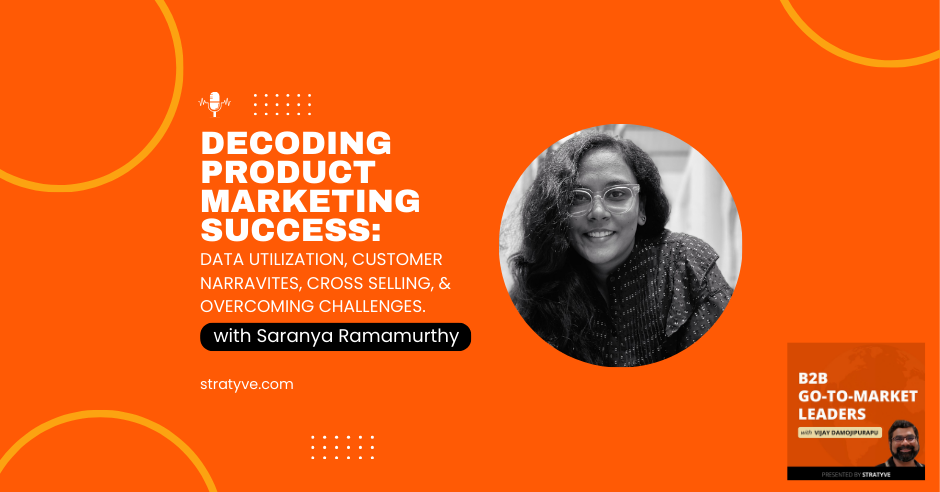
What does it take to master the intricate art of product marketing? Ever wondered what goes into crafting a compelling product marketing strategy? Or how decision-making delays can be navigated to drive success? In this episode, host, Vijay Damojipurapu, is joined by Saranya Ramamurthy on the B2B Go-To-Market Leaders Podcast. She is the director Head of Product Marketing at inFeedo. With a spotlight on the power of having a sales champion and insights into customer needs, she provides an insider’s view of the dynamic and challenging world of product marketing. Fasten your seatbelt and tune in now for an adventure into the heart of product marketing!

Listen to the podcast here

Decoding Product Marketing Success: Data Utilisation, Customer Narravites, Cross Selling, and Overcoming Challenges.

The signature question: Fantastic. So with that, yeah. I mean, the standard question that I always taught and ask the guests on my show, which is how do you view and define go to market?

So if you simply ask this to anyone, there’s definitely a textbook definition, right? So if you ask the Product Marketing Manager, they would say like, you know, product market managers are the ones who are building the product, and product marketing managers are the ones who are taking the product to the market. But I would like to add a little nuance here. So I would probably approach it like this, that, you know, it’s about educating your ICP, which is your ideal customer persona, about the solution you’ve crafted for their pain point. So it’s beyond clean-handed person education, in my opinion, it’s about knowing your ICT, knowing your problems, knowing which channels they are active on, and just delivering that message with an educational note. Right? Once you’ve educated them, and if the person is confident that it is solved, or one of their pressing problems, and it is also one of their priorities, they buy it. Right. For me, you know, education is everything. And education is CDN. 

Yeah. So it’s interesting that you take the angle of education. And so this is an interesting perspective. I’ve not spoken or had a lot of product marketing folks on the podcast, but at the same time, it’s funny to say that because I started my marketing journey and career in product marketing. So I see that evolution. So when I started back in the day at Microsoft, I was super excited, enthusiastic, and just eager to find out. Because in my job title, it said, go to market, right? And I was really eager to find out what that is. But as I learned over the last decade or so working at large companies and small companies, something that I’ve noticed is go to market. 

First of all, the definition is so varied, and also something that started percolating and became more and more clear to me is go to market is not just within the realm of the product market, even though that’s part of the job responsibility. If you see the job spec, they say, go to market aspects and activities. Right? So what I would like us to deep dive into is, first of all, the role of Product Marketing in go to market, but then also the gaps. I have a few thoughts, but I want to pause and get your thoughts because I’m sure you’ve also seen this in different organizations, you’ve been at really leading brands. So what are your thoughts on go to market, specifically, when it comes to product marketing?

I would say you know, go to market is actually product marketing. That’s how we are seeing in India, right? So it’s part of you know, what we do, and maybe you know, what we do here is defining the messaging defining the ICPs, and tightening them for the market. But taking it to the market or doing the ads is something that an integrated marketing team or segment marketing team would do, right? So PMS scope is basically validating the ICPs problem, right? So which is the first part of PMF in itself, right? So if you have a new product that you want to launch in the existing market, or you want to launch an existing product in the new market, for example, you start off with a problem validation. So that is an important JDM exercise, since it’s a pre-JDM exercise, I would say. Once you’ve validated that, once you validated your ICTs priorities, like say, for example, your ICP could have this unmet need that you’ve defined, but they might probably have 10 plus unmet needs, where do you stand? What is your priority? And what? And how is their willingness to pay a price for this solution like yours? Right? 

So this is the PMF stage, and during the JDN stage, we take all the learnings and craft the messaging for it. And that’s a very important step. Right? So that is your delivery, right? So educating, right? So for me, it is education, because I’ve done most of my job in PMF. Right? So right now, what I’m doing is just indicating that I know you have a problem like this, and I have the solution for you. Right. So this is what we do in a product marketing function related to GTM. But after defining the channels, and what sort of communication goes on each of these channels, there is a different team that takes it over.

I think what you touched upon is an important, but one piece of the go-to-market, I mean first step, obviously product marketing. Typically, what I’ve seen is product marketing, in conjunction with product management. Pier would do the problem discovery, validation, and come up with a hypothesis for the product market fit, right, and then this product marketing function would then run with Okay, now that we believe this is our hypothesis that this is the problem we are going to solve for this persona. And in this market. And for these channels. Now we start creating content, there’s also the sales enablement that has to happen.

And there are a lot of other things. But then beyond product marketing, that’s the initial step for go to market. And then it goes to sales. I mean, you got SDRs, As, you got other aspects. And then there’s customer success once a product is sold or bought by the customer based on the product, the problem hypothesis. Now, are we ensuring that the customer is seeing value? First of all, are we onboarding them in the right way so that they can see the value? Right? So for me go to market is a more expanded view, yes, it starts with product management and product marketing, but then there’s a much bigger view, which spans across products across marketing, sales, and customer service as well.

Totally, a lot of alignment is required in there. So if this is just, you know, one part of it that you’ve covered in the first bit, definitely, you know, imagine like you’re doing an ad and somebody’s landing on your website and becoming a lead and you put in the messaging, and the sales staff something totally different. Right? Starts with totally missing. So that’s why this has to be extremely connected. So from the messaging that they see on the ad to the website landing page to you know, what the SDR talks about is what the AE gives as a demo. Right, and to, you know, onboarding them on a pilot program, or, you know, onboarding them on a trial package, whatever it is, since they should definitely, you know, see that sort of benefit that we promised in the messaging, right?

Absolutely. Fantastic. I’m sure we’ll cover a lot more of these nuggets in detail. But let’s step back, zoom out, and then help our listeners like, tell who Saranya is, I mean, what is your journey like? And how did you end up in what you’re doing today?

So I’ve been a marketer for about 10 years, I’ve worked with both Sass companies and agencies, a good blend of both b2b and b2c. And I worked on social media marketing, I worked on Regional Marketing, GTM, product marketing for a combination of both b2b and b2c companies. So if you look at the SAS companies that I work for, it include FreshWorks, Zoho, and Airmeet. From an agency experience, I’ve worked with brands like Facebook, Vodafone, and Lenovo, right, so reasonably, these companies were focusing on markets like APAC, the UK, and the EU. At Zoho predominant focus was the UK and EU and FreshWorks. Like I was looking at both the APAC and North American markets during my agency experience I’ve got good market intel about the Middle East and African markets. So this is predominantly it. So I joined as a you know, a consultant for a software reseller starts that’s where my foundation came from. And then I slightly moved away to an agency environment to get the skills of you know, all things that a marketer should do, all the creative skills, and then dive back into the SAS space. That’s my journey, overall.

Oh, yeah, no, very, very cool. This is something that I’ve started seeing. I mean, founders in India, when they think about a software company, they’re not just talking about The Indian footprint or the Asian footprint, but it’s more about how we go global. And that vision or that pursuit is translating to different functions as well, including product marketing. And that’s what I’ve seen. That’s the biggest change I’ve seen over the last 10-15 years. Right. And it’s really cool that you got to work in agencies and got first-hand experience in how the different parts of the regions worldwide, like marketing to something in the Middle East is entirely different from how you market in APAC, versus how you would market in North America.

Absolutely. A lot of regional nuances. The notes here. Yeah.

Yeah. So you started your work as a consultant, and then you shifted to the agency. So what specifically were you doing in an agency?

So at an agency like ours, predominantly doing a marketing strategy and social media strategy? So this is for all B2C companies, right? So with Vodafone, like, you know, we worked on their social media, and at Lenovo, we were looking at their video marketing. And with Facebook, it was more of a strategic partnership. So we help them with all the top 50 customers, AD, AD creators, ad copies, strategic narratives, etc. So yeah, it’s a mix of all things with agencies, it is just for you to dive or explore all the creative possibilities, all that you could do, right as a marketer. So they’re all things operations in all things, creatives and agencies.

Understood and then you shifted to product marketing. So was that like a natural transition? Right? How was the shepherd? And why do you choose product marketing?

So since I already had a software foundation, it wasn’t hard for me to move into product marketing. So the role that I entered like, right after my agency experiences is called the role of a first marketer in the UK, and EU. Right? the company wanted to explore a new market, and they wanted a full-stack marketer, right? So they don’t want anybody that is doing just ads, they don’t want anyone that’s looking at just, you know, copies messaging, they don’t want just, you know, one event person doing events for them. So even just one primary demand generation channel, right? So they want a full stack marketer, with a primary focus on copy messaging, and positioning, I think it was a right fit for me because I kind of gathered all of that from agencies and the software foundational experience. And then I moved in, and it was a good, very, very smooth transition, in my opinion.

Okay. And today, you are the Director of Product Marketing at inFeedo. Are you the Head of Product Marketing over there?

Yes.

Okay. Yeah. Got it. And what is your charter? What is your responsibility, like at inFeedo?

Multiple things, it’s been six months. Crazy, right? So I’m the first product marketer. And in these six months, I’ve set up a team of five product marketers doing different things. inFeedo has two products, one looks at employee engagement, and the other one is an employee Support Platform. So we are looking at all things you know, GDM, we are looking at all things messaging, positioning, pricing, and sales enablement. Sales Enablement is a very crucial piece because it’s a sales lead organization. And we wanted a dedicated person to look at enabling the STRS, enabling AES. And there is product two, which is actually a zero-to-one product. So it’s a very new product in the market. And we are supporting the launch of the product. We support, get, and explore new markets, how we launched this in the existing market, and launch also interesting sales plays like cross-selling, like how do we capitalize from the existing customers that they already have? 

So these are some things that we’re doing away from the usual charter, like, you know, enablement, customer advocacy, AR and VR extra. So that’s the usual pillar, but these are some things that we’ve been touching upon in the last six months.

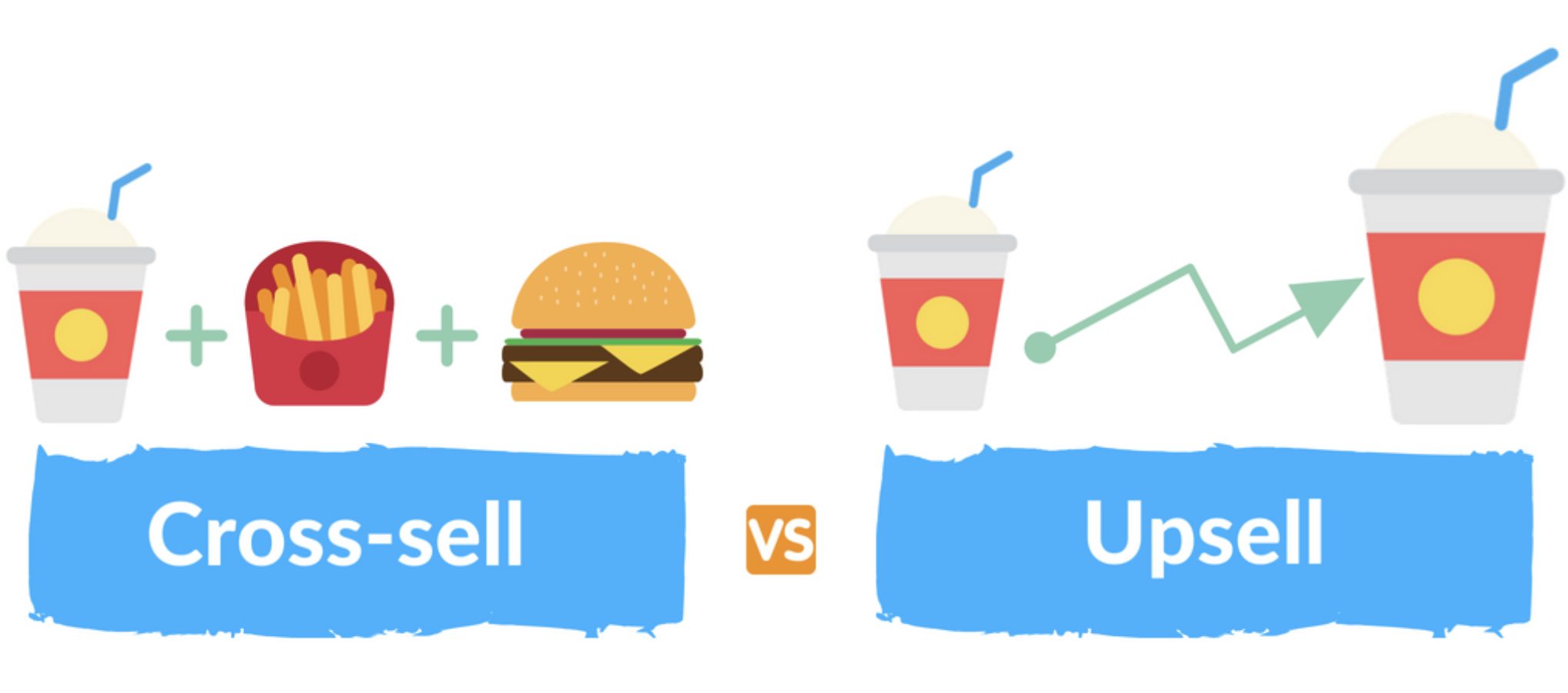
So when I work with my clients, I mean, typically I help them build or execute and accelerate any of these six to eight product marketing programs starting with positioning and messaging, and then we have the customer insights, do you have a good customer insights program in place? And then there is the sales enablement as you mentioned, especially for sales lead organizations, you need sales enablement, then you have a new product launch, and you have a new market launch with two related but entirely different concepts and approaches. Then we have how do you build and do you have a good product content program in place? And adding to that is how are you tracking and evolving product adoption within your customer base? And then the final piece is customer expansion, which you mentioned about cross-sell and up-sell right from these eight categories. First of all, we’ll pause there. I mean, would you agree with these or would you expand with all these categories?

I think they are good. I think the important piece that you might probably have to add here is customer advocacy as a piece as well. So more than intelligence, you know, PMMs usually do advocacy as well, you know, go and ask them how they do their products. This is basically building customer proofs for your product, right? So this is also a part of Product Marketing’s responsibility. That’s something that I observe as a trend in India, I don’t know, like, you know, how it is in the US, but that is one thing. And the other one is AR and VR. That’s also one of the biggest pillars like talking to analysts, constantly keeping in touch with them, having a relationship with them, and informing them about things like, what’s coming in the product, right? Keeping them posted about what’s coming in the product, what the means, and if there are any features that they could do with it. Right. So that’s also one of the important things that we did, that we would cover under PMF. I think that’s predominantly, you’ve covered it all. 

So it basically is like if you work in a very, you know, scaled-up organization, you will have timelines for these like launching new products or markets or exploring a new market in itself. But right now, like you’re doing all of these things, so all that you said, like you do all of those things, because inFeedo being in that stage, so we are a new product marketing team, so we have different spots, taking care of different things at the moment.

Understood. So how did you structure your product marketing team? You said you have like five product marketers. What is your thought process in how you have structured or like, what is your research methodology, and how do you build a product marketing organization? And then how are you structured? 

So if you ask me, like, you know, my usual way of looking at it is, you know, there should be one person that takes care of all things, product launches, and feature launches. And there is one person who is dedicated to enablement. There is one person dedicated to customer advocacy and customer proof, anything customer Intel, market, and Intel intelligence comes from this third person. And the fourth person takes care of AR and VR, right? So that’s how I would probably separate, but looking at the budgets that we have, looking at the areas that we want to invest in, this is how I’ve done it now. So I have a couple of people under engagement as a product, one person taking care or one person is closely aligning with the product and doing all the things that the product wants the product marketing to do, and the other person closely aligning with sales and customer success, and the JDM organizations to kind of get out or to enable them to grow, to enable them to sell, right? That’s something this person is doing. You know, in and out enablement tool, you would know that. 

And there is this third role led mature role is this. And it’s an all-in-one end-to-end TNM role for a new product. So this person does anything around product enablement, anything around sales enablement, and until customer enablement. Once we, you know, launched this particular customer and implemented the solution and the customer, please, how do we increase adoption for that organization until then, right? 

So starting from launching the product to going into the customer place and increasing adoption for the product usage. So that’s something that we do on that call. And we also have a generalist who has all things PMM for the products. And there is a designer, of course, to look at the design needs of the PMO organization. That’s how you structured it now, but there are definitely some gaps. And at inFeedo, the interesting part is customer advocacy is handled by content marketing. Unlike, you know, organizations that I’ve worked in in the past FreshBooks, Zoho, or Airmeet, customers would seize it by content marketing. That’s one thing less for us to worry about at this point in time. That’s how I’m looking at it. Because there’s a lot of things going on. And AR and VR are something that I’m doing myself.

Understood. So can you reiterate the customer advocacy? Who is responsible for customer advocacy at inFeedo? 

It’s content marketing.

Content marketing? Okay. Yeah. Fair enough. Because you’re looking to build its family around case studies and success stories. 

Yes!

So that’s the angle that you’re taking for customer advocacy at inFeedo?

Yes, it’s been I mean, that person is very comfortable, very senior enough. And I don’t think I can get somebody that is senior enough to look at customer advocacy in the pm team at this point in time. 

Yeah!

It’s so I think I’m super comfortable that you know, she’s handling this for us.

Fantastic. And you also mentioned designers. So does a designer report to you within product marketing or is it adjacent?

No designer reports.

That’s unique. I mean, yeah, that’s a very interesting odd setup. So for me when I speak with other good market leaders, I also peek into like how they’re thinking about building their organizations and teams, and something that So that for me, and I think that has to be called out, which is, especially for product marketing, you need to have someone in design closely working with you. And a good thing. You’re already starting in that direction from the get-go. 

Absolutely, yeah, that’s very important. That’s been a major miss in my previous organizations, I made sure that the designer comes under the PMM purview so that everybody is comfortable getting the work done from them. And I say it’s very, very important to have a designer in-house. 

Yeah. So something that I’ve seen, and this is a constant question I keep getting from listeners and other folks I speak with, is like, especially when it comes to design. So what is your guidance and playbook? Let’s just pick an example. Maybe it’s like a product launch or customer expansion program. So how are you guiding your team in interacting with the designer on your team? Right.

So one thing that I’ve taken as an added responsibility is rebranding, right? So definitely, you know, inFeedo needs a little bit of rebranding, in terms of, you know, how we present ourselves to the world. So this is something that you have taken up with the consultant, right? And the color consultant will define a playbook for us. So right now, we don’t have a playbook, we only have the colors, we have the font for now, and we don’t have any styles like, you know, what photographs to use? Or what illustrations to use, What style do we use? So every time you know, it’s me and DB marketing, sitting and defining this process, like why it is very important that every time a designer starts over a design work, they always start from scratch, there is no, you know, means for reference for them to go back. No playbooks or brand guidelines for them to reference. 

So always start from scratch, which in turn takes a lot of time. Like say, for example, if they need to do a tech, they will take two or three days, unlike if they had brand guidelines, they will only take half a day, right? So then we invested in this effort rebranding that’s happening in the sport in October, November, and December. And it’s expected that the consultant will actually give us the brand guidelines, like with all the prerequisites that we already discussed, and that will act as a guide for the design. And that’s so that’s something that we are looking at, and all entail and insights from the CXOs would be passed on to the consultant and then you know, we will arrive at something together. So that’s a project that I’ve taken up, I don’t think so this is under the Product Marketing super view. It’s branding, we don’t have a branding person internally. So I’ve taken that as a side game.

You answer my next question, which is Yeah, typically, it’s under mark or brand? Who would typically do this? But sounds like you just mentioned it, because someone is not doing I mean, no one’s taking that responsibility. You just ran with that. And you’re working with your VP of marketing around brand and design as well. 

Absolutely. Because we are looking at it as a product branding, the product brand, you know, we are the ones who are naming these products, we are the ones who are leaving these bots and you know, naming any new launches that we are new products that we are launching in the market. So if that’s the case, then they could also probably be a key contributor with branding, until like the senior branding person in-house.

Got it? And what is the whole that the branding consultant is doing? Is it around the style guide or the content writing style guide? Or is it something beyond and more than that?

It’s the design style guide.

Got it.

Only that, so messaging positioning, you know, all of it will be done by us all the content boilerplates and content guides will be made by the content marketing and product marketing together. And he would be looking at all things design and a lab kit that essentially kit like that. So brand guidelines like this website should look like this are what your sales bulletins should look like! And what social posts should look like! So it just gives you you know, all the guidelines.

For consistency across all channels, which is good. So sorry. Yeah, that’s a great insight. Thank you for sharing how you thought about how you built your product marketing team and organization as well as the role of the designer in your marketing overall. So something else related to that, which is how do you track and measure the impact of Product Marketing, like KPIs you mentioned about I know, before we hit record, you mentioned about your quarterly offset and things like that. So talk to us about how you think about KPIs and how you show the impact to the leadership team.

Yep! So if you’d asked me like, six months ago, my definition would probably be different. But now you know, my ideology changed a little bit like inFeedo gave a little bit of you know, change in my you know, thought process here. So, to define it simply, Product Marketing wouldn’t have like, you know, one universal KPI to chase because obviously we are intersecting with multiple cross-functional teams, like say we are being we are intersecting with sales and impacting revenue, we are intersecting with products and impacting adoption, right? Awareness or option activation, all of these KPIs, and we are also doing a lot of awareness-related stuff, we are building a pipe with growth marketing, right? So we are helping with messaging for new advertisements or any change in the messaging pillars. It’s so, it’s about the goals that we own in that particular quarter along with the cross-functional stakeholders. For example, if the product focus is to drive activation for a particular feature, at the end of this quarter, so many customers should be activated for this new feature. Right? 

So that means like, you know, product marketers, one of the KPIs would be around, you know, activating, right? So, we take a shared goal, so that there is no alignment mismatch, right? So you go to cross-functional stakeholders. So there’ve been a lot of times in the past that, you know, I go to a cross-functional stakeholder and ask for something that I want to do. And it’s not even there in their KPIs. It’s not their job, right? Like, they did not do this. Right? So right now, it’s very easy because we all do share KPIs like we all take shared KPIs, and from a sales enablement perspective, we take KPIs on when rates conversions, it could be, you know, and MQL’s to SEO conversions. Right? So any improvements there, right? And it could also be a number like, you know, I need to do the classes for so many deals, so that like, we help the sales sell faster and smarter. So that’s predominantly it, it’s multiple KPIs, and each one and each board will take multiple KPIs basis, you know, their alignment with the product, or sales or you know, growth marketing teams. 

How do you track? I mean, first of all, the two angles to this, which is you’re giving your priorities to your product marketing report and the designer to ensure that the KPIs are being tracked and you’re making progress. At the same time, you need to report progress to the cross-functional peers and the leadership team. 

Absolutely, Yep. I should do that. So for example, if I have a launch person in the team and they take a launch or activation around KPI, the loaded KPI is also my KPI. Right? So anything, what is the launch sell as it helps, it helps customer expansion. It helps customer enablement, right? So I’ll take a loaded KPI and the team takes an operational KPI or tactical KPI, right? You know whatever the product wants to achieve, right? And there is part two, which is the enablement KPI. The enablement person has a goal like a link by helping the SDR to have a better Enfield SEO conversion and a better win rate in the mid-market and enterprise segment whatsoever it is right. So I’ll have a builder or a combined KPI. All things covered like that will be my KPI. Product will be my KPI 1 sales will be my KPI two and the 3rd will be any strategic projects that you’re doing launching new products in a new market, or launching an existing part in the new market. I think that all of it aligns with the company goals,

How are you thinking about how you’re spending a budget? First of all, do you have a budget, or as most of the budget, typically with the demand and media side of things? 

Yes, so product marketing, sure, doesn’t have an exclusive budget. So we have a shared budget as a marketing team. So bases priority like for example, like you know how we got a branding consultant this quarter. That’s because like, you know, to other stakeholders, like from demand had to let go of our priority projects, right? So it’s us discussing and debating, which is more important to the organization. And it’s just the overall marketing budget that we shared.

And then talking about KPIs and something that I’ve seen, and obviously, you’ll relate to this sorry, which is product marketing plays a key role in go to market. But then the KPIs are the needle that they move, it takes one or even two quarters for them to see the impact that pays out. So how are you? First of all, beating the drum rightly so that your team is doing the right things and working on the right priorities. And how are you ensuring that the budget or the people are not taken away while people are waiting to see the results of product marketing activities?

Absolutely. That’s an interesting question. So, these are my VP marketing books, right? So every other activity has a leading indicator and a lagging indicator. So a lagging indicator could have multiple leading indicators to it. So there are just you know, phases of this project that we need that we need to define at the end of phase one, I should operationally complete this stuff. At the end of phase two, I should have completed, you know, this task, right? And at the end of the project itself, that’s when we start implementing this or rolling this out entirely and then start reaping the benefit of Laurie. Right? So, my VP of marketing said, but I would probably say that you know, it’s not that difficult to have a metric-centric KPI for a quarter. 

So not all things are lagging. Maybe like, you know, it’s, for example, if you say like, my sales lifecycle is huge. And that’s why I feel like you know, all things that I’m doing in the classes will probably help, right, most of the deals are in the early stages and not converted this quarter. So if I have a win rate conversion KPI I’m not needed. So it’s, it’s impossible, because obviously, like the built on a pipe, and there are a lot of deals in the closing stages in this quarter two, right? So definitely, like, you know, we can frame our KPI in such a way that you know, we could put a metric and that would also be achievable. And we can definitely go back to the leadership and tell them that, you know, so far it’s worked that way. So we’ve taken quarterly KPIs. We’ve taken KPIs for two quarters, and it’s worked well for us to date, except for the branding project. Right? Which is, which is definitely not a product marketing project. It’s definitely something that we’re doing for awareness and better branding purposes.

Okay, cool. Obviously, not everything is a success or a failure when it comes to go to market. So why don’t you share with listeners one go-to-market success story and one go-to-market failure story, either at inFeedo, Airmeet, Zoho, or whichever brands you’re part of?

That story, I’ll do a little confidence sitting here. So I’ve named the condiment basic skills. So this company that I worked with had a couple of products, right? And imagine product A is our flagship product. Product B is the one that is new, very young and isn’t giving much revenue to the company. So it’s easy to call it my least favourite product, right? So, I was paying for this least favourite product, unfortunately, but I’m happy with it because we were able to do a lot of experiments there. And we were running multiple validations in existing markets. And we were also running PMs in jet engine new markets, right? So while doing the research around the market, on the competition, looking at our own product sales in the last two years, we kind of figured that 50% of the accounts that are using product B are also product A users. So they are using this product together, right? 

We also spoke to a few of these customers and invalidated multiple things, you know, on the problems that product A solves for product B solves for. Also, we kind of validated this beautiful narrative that ties both product A and product B is USPS site. So this is something that we’ve not done because the data gave us this. And then we started getting on calls with these customers and started validating this narrative. And it was all successful. And we figured out that you know, with the help of product A, they were able to solve a functional pain point, right? At a functional level, there is a pain point and the product team, we were able to solve it. And with both the products, they were able to expand it a little further and create more visibility cross-functionally, right? 

So it definitely had some sort of global impact. Yeah, like with our A, there was a functional-level impact. And product B there was an all-global impact. So this was a huge narrative for us. Right? So that gave us a good reason to go behind the product is installed and we quickly launched like in weeks time like we launched a cross-sell play. Right? That’s a sales motion that we launched with a very lean effort. We were a three-member PMM team and only like, you know, one head of marketing and brand myself focusing on this initiative. And the sales numbers were, you know, already busy selling the flagship product. How do we motivate and how do we train them? And we launched this process like we launched all the training, we launched the latest content pieces, everything around it. And we had a brand city list that we went behind, and we created a pipe of 1.5 million in just one quarter. Right? So all with the existing resources. I’ve even asked for extra budgets, everything organic, and even asked for extra members to focus on team members. Yeah, and the key here is what we’ve built is enterprise and midmarket pipe in the future with converts, right? It’s less likely to churn according to the data that we had as well. Right? So the earnings here is the sales motion that we are looking to create the narrative that we’re trying to craft, and PMF that you’re trying to find, like, everything is right in front of us, we may not actually start with a clean slate, we can’t start a narrative, do we not open an empty document and start paring down on the narrative, there is something that you can get from your customer conversations or prospect conversations, you need not start of a playbook without having an idea on like, you know, what is making an impact and what’s not making an impact? Because there is already a lot of data in front of you, a lot of intel that is kind of you. So I think that it’s been an eye-opener for me to rely on. 

That was a good success story. I mean, the insight that he got was product be elevated product a functional impact and product be elevated to a cross-functional and organizational impact. How did you arrive at that insight? Like, what places were you looking at for the data?

So basically, like, we never combined product A and product B together in the first place? Right? So we were looking at this as a, you know, a product separately, and we were looking at this as a product separately, right now, you know, at inFeedo as well we’re trying too hard to bring a story together for engagement and support as a product together. But it’s not blending. Yeah, right. At that point in time, like, we never looked at a blended use case. But we knew that there were some benefits that could happen. But we strengthen the integrations a little bit, right, even after, like during the validation stage. And after validating we came back, strengthened the use cases a little bit, and then it became a little more effective, right? But still, you know, we were able to see the narrative through, right? So that was, it’s just that, you know, it just has to happen, like you need to discover, you need to sit with data, you need to understand that and see if there is a story behind every number that you see. 

So what are the data sources wherever you’re looking at for this?

So these are basically our internal sources? Because it’s just our own products.

Was it CRM, or was it product adoption metrics? 

It’s an analytics tool. Yeah, in general.

Understood. Okay. And then switching gears a bit over here. So what’s your go-to-market failure story, and the lessons that you learned from there? Yeah,

A lot of interesting things there as well. Obviously, like, you know, we all have our own successes and failures, definitely a lot of failures, like, because, you know, when you start off is when you fail the most, for me also, it’s the same, like, you know, when I switched to the SaaS company, that’s when, like, you know, I kind of understand like, you know, this is not how SaaS companies work. Yeah, but it says it could probably work this way. Right? So that is the trend, right? So I’m not a big fan of writing behind trends. So from your agency experience, you could probably rely too much on trends. But in a SaaS company, it wouldn’t probably work that way. So it’s actually I fell in a lot of cases, because, you know, I’m saying this, because right now, I’m working for an AI company, which is a trend trading, right? So both the products are powered by inFeedo. And I also used to work for this company called Air meet, which was into virtual events during the pandemic, which was the trend and so I tell you, like, why I, I kind of hate trends right now. Because, you know, trends could come and go, but products should ideally have a larger purpose, and it has to look at the larger problem than it should solve. Right? So for example, during the pandemic, the trend was virtually guns. And, we used what events will be like in the year, we abused the term virtual events, literally. And then it evolved into a hybrid? Like once things started opening up a little bit, right? Everybody was talking about, okay, let’s talk about virtual events. Let’s go hybrid, right? And now it has completely changed. And I’m sure like every other word will even look at a different route altogether. So the trend is not distinct. Definitely. So the flip side of the trend is also that like, what if your ICP like my current ICP is the HR leaders? What if they don’t get this point? They don’t know this, they need a master class, or what if the staff are not trained to use an AI? Right? 

And what is it just, you know, scares them like, okay, like, you know, everybody’s talking to you all, say, really complex. And there are also multiple platforms like LinkedIn and all of these learning sources and communities that talk about these trends both in a positive and a negative way. And what if, you know, when they’re talking about the negative things about AI or virtual events like it could impact my ICP’s decision-making as well? When somebody talks about the flip side of AI, you know, HR community, right, I would get more questions during my, you know, calls with the customers. 

And the most important part here is, if you’re looking at enterprise, and midmarket as your customer segment, you clearly shouldn’t go behind the trend, because they would not rely on a feeding trend, they know that it’s going to change today’s AI towards something else. So they always go behind a trustworthy product, and they are the go behind a trustworthy founding team. So that’s why, you know, I’m totally against it. And the second thing that has actually failed me is the timing of both. 

So, we kind of launched or focused team effort with proper dedicated budgets. I told you about the cross-sell motion, which was like a clean effort, with no known budgets, but we still did it. But this was dedicated, we got the budgets, and we got the focus team as well dedicated to selling it to a vertical, but this is when the companies were heavily downsizing, restructuring, and cost-cutting, cutting was advantageous for us because we wanted to replace the KOSPI. antenatal right, but still, at that point in time, nobody was evaluating all our bonds, which were not answered. Right. Nobody was in the mindset already to spend that time to replace the solution, give that implementation time extra, right? So that’s also something that failed me. So friend, timing, both are my villains at this point? 

No, no, for sure. Timing and trends, for sure.

So I, right now, after the pandemic, meeting them in a physical, you know, the event has actually reduced. So we have been meeting them more virtually now. So it could be like on a weekly basis like we get on sales calls, we get on, you know, validation interviews with customers, right? to validate an idea or submission. And we also, you know, it’s not just, you know, you going on a call with them to understand that it is also in the communities, right? you can go and be a part of the communities that they are most active in, right? Especially HR communities, there are plenty of communities, there is a channel called Slack channel called people, there are a lot of HR communities on LinkedIn, where they put their daily day-to-day problems, right? So that’s where you consume these kinds of content. So it’s also important for you to consume raw content, right? So when you’re going on a call, maybe like you’re just posting, like, do you like this? Are you okay with this? Is this your problem? Right? 

Like, we asked a lot of pointed questions, but when you go to cog communities, you tend to get raw data on, you know, how their day-to-day is looking like. So that’s also one of the avenues that I usually go on. And the third could be any recorded calls. So even if I’m not able to catch up with customers in person, so I go on customer calls, listen to them, read customer calls, listen to them, like understand, like, you know, what their pain points and unmet needs are, and then come back my drawing board and change, make changes or tweaks in the messaging, if any?

So do you have any specific cadence or frequency for each of these on a weekly basis?

I do this daily. 

Okay, good.

My 10 to 11 is actually locked to know the customer. 

Nice. That’s what I was hoping to hear. I’m glad that you said it’s daily, I just want to give guidance to the listeners as to how they should be planning that day and week when it comes to knowing the customer.

Yeah, so my 10 to 11 is actually prepare and know the customer. So it has links to all the communities that I follow. So I can quickly go and check if there are any new messages in there and eat anything or listen to a chorus calling a new chorus call. So that’s all I do. 

So when it comes to I think based on what you shared, you have a very good product marketing DNA and Product Marketing Muscle based on how you structure the organization, the right people in the right seats, and you’re prioritizing customer knowledge or insights. So given all these things, what would you put as the top one, two, or three challenges for Product Marketing? Like where is your biggest shot for gaps?

The biggest shortfall is you know, you might tend to face a lot of delays in decision-making because there are a lot of stakeholders involved and making a product marketing decision. Like for example, if you’re exploring a new market, it is not just you, but you are a part, right? There are CXOs in the team that are LT members, leadership team, there is product leadership, sales leadership, and multiple exits are really effective to get all their points of view. But curating all those points of view and having a proper plan of action could probably be different. So that is something that we need to be extremely patient about. It is going to be delayed. This is something that I’ve been trying to solve for a long time. Right? So I think that is one of the biggest disadvantages. And the second could probably be, that not all your ideas will be approved, right? So getting a buying is really difficult. Until and unless you pack it with data, you back it with all the intelligence that is available in the market. So getting a buy is not a joke. It’s, that you cannot probably have an idea today and toss it to your cross-functional, leaders tomorrow definitely if you have an idea today, you do your research tomorrow, and then invest a little more time in talking to cross-functional leaders and understanding their perspective on this on day three, and then go to them with that, right. So we always need to spend that time doing that research. So yeah, I mean, buying and delays in launching something or delays in crafting a plan of action is something that’s a disadvantage.

So those are all valid. I mean, it can apply to any other function as well. I mean, buying and delays, obviously not. Because you have so many investors, not investors, but stakeholders that are part of the decision-making process. That’s a given. But when it comes to, for example, those 8 or 10, product marketing programs that we talked about earlier, where would put your finger and say, Okay, that’s the challenge that I want to invest in going forward, like the positioning and messaging, customer expansion, new product launch, new market launch, ERP, our product content, customer insight. 

Yeah, I mean, if you look at it, like inside every other part that you’re talking about, there is a challenge, right? There’s only one challenge or the other, like, for example, in sales enablement, you might probably craft a narrative, you might think that you know, this is the best thing that you could probably do. And while taking it to sales, there are a lot of objections that you might probably want to have, right? So they will not implement it, they will say like, you know, we are comfortable with the old narrative, right? Like, why are we changing this now? What are the reasons we are changing it now, even after training, they would still be very comfortable with all that change management, and getting that adoption for all the sales clutters that you’re creating, you might create such useful villagers. Everybody will be reacting fire on it, like whenever you put it on Slack, but still, like there is no usage, then you can’t metrics to the leadership team as well. So that is one of the challenges like under sales, anything. 

So like that there are multiple things under each of these spots. I think it’s part of our job to tackle all of these challenges. And I’m so used to, you know, sailing within these challenges that I don’t even look at this as a challenge anymore. It’s part and parcel of life. That’s why, you know, I kind of said something that’s totally relevant, right? 

Yeah. I mean, if you’re open to it, I can share some advice as to how I tackle that specific sales enablement challenge. And here’s what I tell my clients as well, right? So one thing that I do is I typically get a champion within the sales team and ideally should be like the top seller. So get his or her buying in, and pilot the program with them. If you’re trying to do a new sales Narrator piloted with that seller. And then maybe she or he would do that pitch and then show hey, by the way to the sales team, are in the annual or quarterly sales kick up, they’ll say, by the way, with this new narrative, I’m seeing so much more hype and growth and traction. This is really cool. You guys should take this on. 

Absolutely 

A salesperson be the champion on your behalf.

Absolutely. So this is something that we did as well. So we had a closed loop out at sales leadership that was ready to try it for at least two calls a week and we gave 1 month’s time. They got perspectives from all those fold-poor readers, curated all of them, got them on a call, and let them launch it. Right. So this is exactly what we did as well. I think having a champion is both valid, you know, proper deal scenario, that we should have a person inside that deal. And also, in this case, as well.

Yeah. Fantastic. I know we’re coming up against time over here, so, the last question to you is, if you were to turn back the clock and look back at your career journey so far, what advice would you give to your younger self on day one of your go-to-market journey? Um, this is more advice. Obviously, you can’t turn back the clock and change anything but then the advice that you would want the listeners to take away?

Absolutely. So I don’t think so. I could save my younger self from any of the battles that I’ve faced, but maybe I would just tell her to embrace herself and it’s completely normal to lose a battle because you know, there are multiple battles that you’d be facing on a day-to-day basis. As you know, we will be talking to Sailgp, about products like multiple batteries, multiple buy-ins and multiple decisions to be made. So you would have battles, you would have disagreements if you’re not pro. We have to sign off or anything, but you will only get stronger with time. Right? So Product Marketing just bruises on you. You don’t get it, but you will get it someday, right like on day one, it’s definitely not possible. But as you grow like PMM grows on you, and you will get stronger with time. That’s something that I would tell my younger self and people who are listening as well. Fantastic.

Thank you so much for your time and for sharing all those insights. Suranya. Good luck to you and your team.

Thanks so much, Vijay.

Continue reading “Decoding Product Marketing Success: Data Utilisation, Customer Narravites, Cross Selling, and Overcoming Challenges with Saranaya Ramamurthy”

Are you prepared for the changing landscape 2024 will bring? Is your business sustainable, agile, and profitable? Set your business’s foundations for success this year. I brought Luke Holman to the B2B Go To Market Leaders Podcast to learn how. 

Luke is a serial entrepreneur and current Chief Innovation Officer of Applied Frameworks. He shares his expertise on agile business methodologies, pricing and packaging strategies, and the 3 Pillars of Business Sustainability. Gain valuable insights into the art of client outreach, strategic pivots, and the influential role of a profit-first approach in crafting successful go-to-market approaches. Fasten your seatbelts as Luke guides you on making our business more profitable, lasting, and flexible.

Listen to the podcast here

Mastering Software Pricing: Innovation, Agile Business Tactics, and Profit-Driven Pricing with Luke Holman

The signature question: all my listeners love that I start the show, and we dive right into the meat of a topic, which is how do you view and define go-to-market?

Well, go-to-market is a set of comprehensive activities that help the organization take what they’ve created and bring it to their customers through any number of direct or indirect channels, any number of partner relationships, any number of sales team structures. Sometimes we have direct sales; sometimes we have indirect sales. We have sales reps; we have sales engineers. So, there’s a whole set of go-to-market activities that make sure that the organization is prepared to realize the benefit for themselves of what they’ve created for their customers.

Totally. I think you touched upon critical points, right? One is, obviously first and foremost, it starts with the customers whom you’re really targeting and who you’re solving for. That’s one, and then the intern aspect, you got the product team, you got the sales team, making sure that they’re aligned. Of course, you have a product, you have marketing, you have sales, and you have customer success, if it’s a software-as-a-service organization. So there are a lot of these teams that have to be aligned internally while bringing that product and taking it to a customer. 

That’s right. 

That’s a great start. So looking at your career journey and path, clearly, at least in the early phase of your career, you were very deep and very involved in the product development aspect of things. So we’ll dive into Agile practice. But just to expand and bring all our listeners up to speed? And can you share your career story like where you started? Why, what was your first job like what did you become and who you are today?

Well, I have had a long history in the technology field starting working for a very large company called Electronic Data Systems. And EDS had many, many data centers, and I was working in the technical area, literally crawling underneath the floor, cabling computers. I was working in network, networking, and then one thing led to another, and you get promoted; you become a developer. I picked up a bachelor’s and master’s degree in computer science and computer science and engineering from the University of Michigan. I went back to EDS, and I became a vice president of engineering at a subsidiary. 

But there’s this journey in my career of always wanting to learn how to do and create and build the best products for our customers. So that journey led me through user interface design, and usability, but I actually ended up centering on product management, which is really trying to understand the needs of the customers as best you can and then build solutions that meet those needs in a way that creates a profit for the company. 

In that journey, I became associated with the Agile software development movement, and at the very beginning helped form the first Agile conference way back in 2003, served on the board of the Agile Alliance, worked with the Scrum Alliance, have wrote several books, have started and sold companies have acquired companies. But in all of these areas, I’d say there was the foundation of Agile software development practices in Agile product management practices, all associated with creating a profitable solution.


Very cool. Definitely, we will get into the companies that you bought as well as the companies that you had a good exit. So, you did mention why you got fascinated and curious about agile and agile development and the Scrum process. So you did tie that back to how products get built and how they go to market and you’re really curious about the efficiencies and the gaps during the development process.

I wouldn’t equate at all Scrum with Agile. I would say that Agile is, according to the Agile Manifesto. Agile is a set of values and practices. There are many agile methods, Scrum being optimized for small organizations or a couple of teams in the Scaled Agile Framework, being by far the leading technique or method, optimized for large organizations or large numbers of teams. I have been more associated in my career and more aligned with large-scale development initiatives, with dozens of teams to hundreds of teams working on extremely large and complex systems. 

And of course, I am a SAFe fellow, which is the highest distinction you can have in the SAFe community. I was a former SAFe contributor in both agile product management and in Lean portfolio management. So I’m more associated with the challenges of, in terms of a consulting capacity, the challenges of large organizations creating profitable solutions for myself, right? I’m an entrepreneur, and so my organizations are smaller. So I think it’s important to consider which of the two perspectives I’m being asked about.

 One perspective is, how do you help large organizations with globally distributed teams work more efficiently? And also, for your own work? How have you created software companies? And then manage them? Because they’re slightly different forces? And sometimes radically different forces when you’re working with one or two teams versus say, 400 Teams? Right?

Scaling Agile with SAFe (Scaled Agile Framework)

For sure. And I would like you to share that expertise. I mean, as you well articulated it, look, when you’re building your own companies, you’re obviously small and nimble we’ll be applying one methodology versus when you work with the likes of just not to say that they are the clients, but the likes of large organizations like Google or HP or Cisco, or Microsoft, right? I mean, they have huge dev teams spread across the metrology that they will use for product development and delivery.

That’s right. So let’s go back to where you want to be if all you ever want to be as small and stay small, then a method like Scrum is probably fine. For me, I’ve worked in companies, and even in my own company, every family, every company has to have a way of making a financial decision. That’s portfolio management, whether it’s you and your partner, your pair bond partner, your wife, or your husband. If you were to sit down and make a financial decision of significance, like buying a home, or buying a car, or taking a family vacation or having a child, you would do it together. Similarly, when you’re a small company, you still have a portfolio because you’re still making significant decisions. And when you’re a large company, you’re making significant decisions.

 So when people, when people equate significance with a dolllar amount, they devalue the kind of decision being made. So let’s say I’m Cisco, well, my decisions would be hundreds of millions of dollars. In terms of significance, right? That’s very different than the decision I would make at a small company. But both small and large companies have significant decisions to make about how they invest their money, how they spend their money, and where they put their attention.

No, totally. I think you hit it correctly. The significance does not or does not correlate or equal to the size of the business. But the significance matters, right? For example, my own journey – when I work at startups or for my own consulting company, as we sit today this week, I was figuring out where I should invest my time, energy, and money. Should I pursue a different go-to-market strategy? Should I invest in building a new content portfolio that will be relevant for demand gen and demand creation? Or should I work with a co-founder friend of mine where we know for a fact that I’m blacking out the AI compliance space? A lot is happening in that space. Is that the right investment area? 

Yeah. Absolutely. 

And then the scale of the decision-making and the factors will go many for like 5-10X when you talk about companies like Cisco and Microsoft, right? So, you are the founder and CEO of Conteneo. Was it a consulting practice or a software product company or both? What is that journey like?

Well, most companies are a mix of both. Most companies have some kind of a service component. It’s just the degree. I mean, some absolutely pure software companies don’t. But most companies, as they grow and evolve, have a services component. Conteneo was based on my book “Innovation Games.” What Conteneo provided were software platforms for doing games online and consulting services that would help organizations design and produce both in-person and online innovation games events. So, in the Agile community, there are many well-known games like Sailboat or Speedboat, product box by a feature. All of these games have an in-person expression, and many of them have an online expression. So Conteneo was a bootstrapped company in the B2B software space where we provided to our customers a platform for doing innovation games with distributed teams and in an online setting. We bootstrapped it. So we didn’t have outside VC funding, which is a little rare in Silicon Valley. And then we ended up selling Conteneo to Scaled Agile a few years ago. And that was a great outcome for all stakeholders.

Innovation Games by Luke Hohmann 

And again, as this is a go-to-market podcast, it’d be good if you can, at least at a high level, talk about your go-to-market journey, but continue, like early days to how you scale it and the exit?

Well, there are many aspects. I think the question is, to what degree does a given company consider its marketing strategy a go-to-market strategy? I consider that many times the marketing strategy is intimately related to the go-to-market strategy. So we followed a pattern that’s somewhat successful in business where we wrote a book, we built training. The book creates awareness and interest in the training. The training teaches people how to use the techniques, and it creates demand for consulting services and online platforms. Once we had the online platforms, we were able to serve the demand that we had created. In terms of a go-to-market strategy, that’s where I think you start to see the distinctions between how you intend to go to market and then the feedback from going to market. 

Let me explain one of the pivots that we made at Conteneo. We’ve been talking about innovation games, which is a discrete event of usually between four and eight people; they can come together and work together on a business problem. Well, we thought the right way to price that was per game, because you can think about the unit of value being a game, right? What happened was that it created a variable spend, and our customers didn’t like variable spend, especially when so much of what we do in business now is a monthly fee. You have a fixed monthly fee, but you have variable usage; sometimes you’re using the platform more, and sometimes you’re using the platform less. So we found that in our go-to-market strategy, we were charging the right amount of money, but we weren’t charging the right way for the money. That’s the kind of go-to-market change that people need to be aware of. We call that a value exchange model. In our new book, “Software Profit Streams: A Guide to Designing Sustainably Profitable Businesses,” we talked about, as part of your go-to-market strategy, you have to get your pricing, packaging, and licensing down, and there are choices that you need to make as a product manager, as a product team. How do I trade money for value? The value exchange model needs to be aligned with how the customers both perceive value and how they want to pay for value. Those were some of the changes that we made in our own go-to-market strategy and our own go-to-market journey.

Software Profit Streams by Jason Tanner & Luke Hohmann 

The brilliance that stands out in your go-to-market journey is you touched upon a very key aspect. I’ve studied go-to-market leaders, understanding what sets them apart. Think of the NBA League, with 30 teams. However, something magical happens when you peek under the hood of the operations of the top two or three basketball teams consistently making it to the playoffs and winning titles. It comes down to two or three things.

So, concerning go-to-market teams, it boils down to content, community, and experiences/events. Three crucial elements. One aspect you’ve nailed very well is content, exemplified by the book in your case. The innovation games in your earlier company, and now focusing on software pricing. What led you to that thought process? First, creating and writing a book. Then, deriving training material, followed by consulting and software development. What influenced you to embark on this path?

That’s a no. No one’s ever asked me that before. So, that’s a really interesting question. I learned the power of writing a book when I first moved to Silicon Valley. My first company in Silicon Valley was a company called Origin Systems. Origin Systems was an absolute breakthrough company. It was wildly innovative. What we did was take all of the world’s patent data and put it into a data warehouse for analytics. In terms of the utility of a patent, how does a patent get monetized? What is the patent related to? What are the opportunities for innovation? It was based on the work of a couple of gentlemen, most notably a gentleman named Kevin Rivette. I remember when I joined the company, the head of marketing was a guy named David Polio. That’s where I learned this pattern. David, in one of our leadership meetings, said, ‘Hey, when you’re creating an entirely new industry, an entirely new thing, you have to get the content first. The way you get the content first is you write a book.’ So Kevin Rivette wrote a book called ‘Rembrandt’s in the Attic,’ which was considered a breakthrough and groundbreaking book associated with intellectual property licensing. That book, in combination with our software platform, really drove that company to a successful outcome. I credit David Pulizia with showing the power of content and then building out the community and the software platform. At Origin, we didn’t have a lot of events, but we had a great software platform. I think, Vijay, the notion of the content is partially correlated to the degree of innovation or the degree of novelty about what you’re offering. 

When I wrote ‘Innovation Games,’ it was the first book in the genre of using serious games, serious game techniques, and collaborative games to solve problems. Since then, we’ve had other books like ‘Game Storming’ or ‘Reality is Broken’ from Jane McGonigal. But when you’re the first one, you really need to create that content to cement the industry and the breakthrough. That’s why we did that with ‘Software Profit Streams,’ the new book. There are books about pricing, but the problem with books about pricing is that they’re pricing pens and menu items in restaurants and wine. 

You know, consumer products pricing. 

Even in the business world, pricing gets wrapped up into things like supply chains and Bill of Materials, which are all important. But software is so different that we decided the prior work was no longer sufficient to meet the needs of what’s happening in the world. Andreessen is right; software is eating the world. We need a means by which we can look at pricing, packaging, and licensing for software-enabled solutions because those are unique in the world. We needed something new to really capture that.

Well said, and clearly, you learned your lessons, and you got the playbook. Going back to what you mentioned about Origin Systems, you really learned that system from your head of marketing back then. And you apply that in your own consulting career.

He’s brilliant. And, I think it’s a consistent pattern. We’re not the only firm that applies that pattern. But there’s enough proven success around that pattern that we should look at that.

Absolutely. So, did you take the time to write the book first, launch it, and then start the consulting practice and the training, or what is…

The book was mostly informed by years of consulting experience. We were able to mine the experience of ourselves and our customers, really looking at all the different work we had done over a near 20-year history. Applied Frameworks has been around for more than 20 years, so we had a very rich and deep history to draw from as we were writing the book. Now that the book has been written, we’re working on the software platform called Horizon and have it in the market. Now we’re just following good agile practices, continuing to improve the Horizon platform for solution profitability management.

Fantastic. So one of the questions I typically ask my guests, and I do that more in the latter part of the show, but clearly, when it comes to you. So one of the questions I ask is, what is our special secret sauce? And what should people come to you for advice? Clearly, in your case, it sounds like you’ve mastered the game around go-to-market, in terms of content, sequencing, and applying Agile and Scrum practices. That’s how I see it.

I think I would add that I would be cautious, again, about, for example, we’re not a sales training company. The art of go-to-market is treating your sales team. Our expertise is in pricing, packaging, and licensing. For example, too many organizations try to get to a good, better, best pricing model when sometimes good, better, best pricing isn’t needed. Other problems we see are companies, especially large companies, will create a solution. Then they deliver more value using Agile techniques, but they don’t raise the price, or they don’t have a strategy of how their solution architecture captures value. We see applications just get bigger and bigger. Sometimes the better approach is to keep the main application tight and focused. Then add modules or add-ons that an organization can acquire to enhance their offering. It’s really that strategy that you’re looking for that will help you determine your actual price point and how to make the most amount of money at it.

I’m looking at your book, the Software Profit Streams book. And as with any top-tier books, you would also provide a canvas. Can you walk us through the canvas for the profit stream? Absolutely.

So canvases are powerful tools; we have the business model canvas and the profit-sharing canvas. What a canvas does is it allows us to quickly and effectively capture the main elements of a causal system. I’m an engineer, you’re an engineer; we have an engineering background and think in terms of systems. When I deal with pricing, I have to manage three really related items. First, I have to manage my solution sustainability. What are the needs of my customer? What does my solution provide to my customer? How are they evolving over time? Because customers are not static, and problems in the world aren’t static. I have to have an ongoing evolution, a roadmap, etc. The second kind of sustainability is economic sustainability. Does my customer feel they’re getting good value, which is more value than what they paid? Am I creating a sustainable business? Am I making a profit? Is my revenue greater than my costs? The third element of sustainability is what we call relationship sustainability. There are really three relationships that matter for a software-enabled solution or a company. The first is my suppliers. Everyone is licensed in various technology components. How am I managing my in-licenses and my relationship with my suppliers? The second is my relationship with my customers. Software isn’t sold; software is licensed. There’s a license agreement, terms of service for a website, or a complex agreement for traditional software that defines my use of that software. What are the terms, conditions, and entitlements? How am I managing my relationship with my customers? The third component is compliance, which concerns how am I managing my relationship with regulatory agencies, and with standards? Let’s say that you and I wanted to build a website together, and we wanted to make it accessible to people with disabilities. Well, now I have to honor the WC3 web accessibility standards. It’s not a law, but it’s a choice that I’ve made. When we look at compliance, we’re thinking about laws and regulations ranging from, say, GDPR or the Australian Privacy Rights Act or in California, the CCPA, to standards and agreements. How I manage my relationships determines my relationship sustainability. If I routinely create poor relationships, it’s going to be hard for my business to continue to grow and be successful.

I think that’s a good canvas. I’m definitely going to refer to that, and I’ll highly encourage other listeners to go check out the book ‘Software Profit Streams‘ in terms of pricing and packaging. Perfect. Wonderful. Quick note, this is the end of part one. So if you can just click on the link and join the second one. To my production team, that’s the end of part one. I’ll see you on the other side. Great. So yes, I think you’ve shared a great framework there when it comes to pricing and packaging. Switching gears a bit over here. Obviously, as you and I know, go-to-market, there are so many flavors. You will see successes, you will see failures. It’s not always up and to the right. So if you can share either from your own personal experience or working with the various clients that you have, a go-to-market success story and a go-to-market failure story. That’d be great.

Sure, well, for a go-to-market success story, one of my clients is CVS Health. They had an extraordinary go-to-market success story with the introduction of their app for scheduling COVID-19 vaccines. It was created in a time of crisis, so people were stressed. It was rolled out in record time for a large company—a very complex app when you think about scheduling for a vaccine with 1000s of stores across the United States, geolocation, capacity planning, store hours, and a tremendous amount of logistics and data. From a go-to-market standpoint, they were able to create and deliver that app. In this case, pricing and packaging were not relevant because it was free. But in terms of a go-to-market success story, that would be one of them. Another one related to our work in pricing and packaging is a company called Knowify. Knowify creates construction management and billing software. When we started working with them, they hadn’t adjusted their pricing and packaging for a couple of years. They had been successful, but we got involved because they just got a post-seed funding round from a venture capital firm, Companion Ventures. Applied Frameworks works with venture capital firms and private equity firms to improve the pricing and packaging aspects of their portfolio companies. One thing we worked on with Knowify was changing their packaging. Before our work, about 20% of their customers signed up for the annual plan. After adjustments, we got that number up to 60%, improving cash flow and making it easier for their sales team to guide customers through changes. It was an amazing change for their go-to-market process and approach from a pricing change.

This image has an empty alt attribute; its file name is cvs_health_logodownload-e1705519283117.pngFantastic, a great story, and great success stories for both. So, I’ll click on each of them. CVS, you mentioned obviously it happened in the time of crisis, the COVID pandemic scenario. So what prompted CVS to reach out to you? I’m assuming they reached out to you, and who from CVS did that? And why?

Sure. So we had a prior relationship, as in so many arenas, with their head of Agile. They reached out to us as part of our normal relationship, doing agile work and scaling agile. In the case of Knowify, the outreach was initially from the venture capital firm that made the investment. Companion Ventures made the investment and then told Knowify, ‘Hey, you should work with Applied Frameworks to improve your pricing and packaging.’ Usually, in this kind of world, you’re going to see word-of-mouth referrals, etc., which is still a significant part of the business.

I think that is a smart move, obviously, on your side to work with influencers. In the first case, it was the head of HR at CVS, a good relationship over the years. In the second case, it was the venture capital that influenced it for sure.

Now, of course, as our software package becomes more prominent, we’re doing more traditional go-to-market strategies, like webinars and podcasts. Also, advertising, blogs, and normal content optimization, content generation. Those are all parts of the go-to-market mix. It’s important for people to remember that when you’re smaller, your go-to-market strategy might be more intimate. When you’re larger, your go-to-market strategy might be more volume-based with less intimacy. Either is probably right; it’s just different. Go-to-market strategies and teams need different techniques and results.

Going back to the case study and success story of Knowify, you mentioned a great result where annual subscriptions increased from 20% to 60%. So what is the process like? Going back to our first question and our discussion, it’s about go-to-market. What is the go-to-market process? I would assume that you guys had to dig into and look at all the CRM records, the pricing, and so on, and the number of customers who did that, and then why people are not switching.

In the case of Knowify, we didn’t spend a lot of time, so I would say that you’re correct. In a normal case, you would be looking at your CRM data, looking at conversions, etc. In the case of Knowify, we were able to determine improvements through what we call a customer benefit analysis. We deconstructed their features into discrete benefits, reverse-engineered market segments, and repackaged the offering to better align with the needs of specific customers. So in the normal case, we would be looking at CRM data, win-loss data, and discount data, but in the case of Knowify, we had a strong signal through customer benefit analysis that we could change the packaging to better align with customer needs.

Fantastic. It’s great timing that you shared the story. I’m working with a client where we’re doing a positioning exercise. The positioning involves identifying target account characteristics, distinct capabilities, and features, and value themes. You got the account segments or characteristics, and features, and then you map them to hone in on the best fit, the 20% or 30% of customer segments that translate to 70-80% of the value stream for you.

We call that a solution benefit map. Once I know the benefits my customers are seeking, I can look at my features and the relationship between features, benefits, and the targeted segment. It’s a rigorous process but doesn’t take as long as it might sound. It can be done quickly when working with existing customers or companies with existing data

And then going to my earlier question, which is, yes, you’ve got go-to-market success stories. But I’m sure we all have go-to-market failure stories. Anything that comes to your mind from a go-to-market failure story?

Although, I think the question becomes if I have a go-to-market failure story, to what degree of failure am I talking about? The ultimate failure is when the company itself fails. So you could argue that it’s not a go-to-market failure; it’s just that it wasn’t a viable company. It’s harder to find go-to-market failures because if the solution is successful or if the company is successful, what that meant was they had a go-to-market experiment, and the explored experiment didn’t work. So they tried something else that did work. If we had persisted in trying to force the market to accept transactional pricing, the company would have failed. But we adapted, took the feedback, and adjusted how we worked. That’s pretty profound because go-to-market is like product-market fit. Sometimes people think, ‘Oh, I have product-market fit, and I’m done.’ But product-market fit is like getting on a highway; it’s the on-ramp. Once you’re on the highway, you have to constantly monitor and adjust your driving. You’re always doing micro-adjustments, and the faster you’re going, the more subtle and frequent the adjustment. Product-market fit and the initial go-to-market strategy get you on the highway, but after that, it’s a very strong repeat process of how am I doing, and how am I adjusting.

I think that’s a very good analogy. In my mind, as you’re speaking to that, it clearly shows that product-market fit is not once and done; beyond product-market fit, it’s scaling, tweaking, and iterating. Going back to your analogy, driving on the freeway, I have to constantly adjust to oncoming traffic, traffic ahead, change lanes, slow down, pivot—all these things apply to the go-to-market world. It reminds me of the conversation I had with Geoffrey Moore, who said exactly along the lines of what you mentioned—that there are not really failures; you either have success or learnings, and there are learnings even if the business fails.

Right, and even if the business fails, there’s learning associated with it. But it’s not clear that it’s a go-to-market failure. It could be just a failure as a business because it’s the right idea, but it’s too early for the market. We’ve seen that in the technology field where ideas get recycled. An example is the original idea for Uber and Lyft, patented about a decade before Uber got started. But the technology just didn’t exist at that time. As technology evolves, things that failed in the past become viable in the future.

Well said. I think that’s a great perspective. Going back to your favorite topics and how you built your businesses around Agile and pricing and packaging, and, of course, my favorite topic, product marketing. Typically, as seen and you can attest to this, it’s a combination of product management and product marketing that has to tackle these two areas. What have you seen, the challenges, as well as things that have really worked when it comes to product management and product marketing in these areas around Agile, thinking about prioritization delivery, and pricing and packaging?

Well, I think, Vijay, that the Agile community is a little better at working on the product marketing side because we do have this idea in Agile that I’m creating a constant flow of value to my customers. This is part of the Agile Manifesto. It’s the set of metrics that we track in SAFe is what we call the flow metrics. We look at things like how frequently are you getting value from your customers. And what’s your batch size? Are you taking on features that are about the right size, so you can continue to deliver value to your customers? The reason we wrote the book is that we’re getting agile organizations who are delivering a flow of value, but they’re not producing a flow of profit. Let’s think about this from the executive standpoint. Let’s pick any size company. Executives aren’t compensated for value. That doesn’t mean anything, especially in a public company. You’re not compensated for value; you’re compensated for creating a profit. And so what we’re seeing is a bit of a backlash in the Agile community, to be honest. And what I mean by a bit of a backlash is that you’re seeing, for example, Capital One firing hundreds of agile coaches and Scrum Masters. You’re seeing different companies say, “Look, we’ve been putting millions of dollars into agile in training, etc. And we need profit, especially with our macro economy. With high inflation, high inflation rates, high cost of capital, people need profit.” So what we’re saying is, let’s evolve. Let’s own proof. Let’s actually move from creating value to creating profit. Now, let me not talk abstractly, let me ask you some really basic questions. If I go to a company that’s doing Agile, I’ll ask them a simple question. They’ll say, “I don’t worry about your Agile process. Like, I don’t care if you’re using Scrum or less or SAFe, whatever, right? Last year, have you consistently delivered value to your customers?” And if they’re an agile organization, the answer is almost always yes, we are consistently delivering. And then I say, when was the last time you explicitly raised your pricing or you explicitly changed your packaging to make sure that the value you’re delivering is resulting in more revenue for your company? And it’s not as easy as answers. Many times, the response is, “Wow, we haven’t raised our pricing in eight months, 12 months, 24 months?” And I’m like, “Okay, you haven’t raised pricing in two years? Have you paid more people in salary and people?” Then I get the response, “Well, you don’t understand. Look, we’re growing as a company. And so we’re fine.” And I’m like, “Yeah, but you’re not. No one can grow indefinitely, right? There’s always some limit to the size of the market. And you want to condition your customers that when you’re creating more value for them, you’re gonna get more value back.

So two things come to my mind when you say that. One, it took me back in time to my MBA days, when my marketing professor said one thing, which really stuck in my mind, even to this day, I’m talking like 15 years plus, it’s still very top of mind, which is pricing is the single biggest lever when it comes to revenue and profits. It absolutely isn’t. Right?

You know, pricing, typically, well, there’s two elements to this, Vijay. One is pricing improvements always, almost exclusively fall directly to the bottom line. It’s very, very frictionless. I mean, if I build a new feature for my application, and it’s really significant, well, now I have to do a press release. And I have to update my documentation, I have to update my sales team, I have to educate them on how to talk to the customers, which is great. That’s an expense. But if I simply were to raise my price, I might have some small costs associated with communicating a price increase to existing customers. But that’s a really powerful lever because it’s a low-cost lever. The second is that McKinsey has data that shows that roughly a 1% increase in price creates a five to 8% increase in actual profit and unit margins. So it’s really curious to me that organizations are not investing much more in their pricing and packaging. It’s kind of just curious to me.

And then when you’re making your other case, again, well put in terms of like, how are you measuring value and if you’re delivering the right value? So in my mind, the second point that came to me was pricing is a good test to see if you’re delivering the right value or not. Increase the price and customers are still sticking, not complaining a whole lot, and not churning. That means you’re, first of all, leaving less money on the table. And the second is customers still see a lot of value in what you’re delivering. Right? Right? Yes, for sure. All right, I know we are coming up against the R, L here, we can go on and on in all these topics.

The last two questions for you are, what resources or communities are people you lean on to stay up to date? In terms of go-to-market practices? Agile, you said Agile community. I can imagine that pricing or even understanding your target customers’ problems, like, how do you stay involved?

You know, it’s funny. I’m not as familiar with any specific communities associated only or exclusively with go-to-market. I tend to think of go-to-market as part of what product management and product marketing do. So I tend to associate with both agile and less agile aspects of product management and product marketing like the Product Development and Management Association is a very classic organization about product management. You see also in the SAFe, the Scaled Agile community, we have a lot of agile product managers from the Agile product management course. And so those are some communities that I stay involved with. And then, of course, there’s LinkedIn, there’s a couple of groups on LinkedIn that are useful. I personally don’t use Facebook. So I am sure there are communities on Facebook. I just don’t participate in those communities. Yep.

And then the final question here is if you were to turn back the clock, what advice would you give to your younger self, granted, you will be happy, and you’ll be satisfied with where you are and how things shape, but if you were to give advice to someone who’s younger in their career.

Well, yeah, it’s funny. We had a dinner party one time, not too long. A couple of months ago, and one of my friends was over, Danny, and he was just eating dinner with us. Like, he said, “What’s the one thing you would change in your life?” And everyone around the table had something they would change, and I had nothing I would change because my life I’ve lived as how I’ve gotten to here. I wouldn’t change anything, the good or the bad. However, there are useful things that, because I do consult with and coach and mentor some young entrepreneurs, right? And so I enjoy that because I was given advice from people, and I think we should pay it forward. So some of the consistent pieces of advice that I like to give to younger people include the idea that you can constantly be learning, and you can constantly be reading and listening to podcasts. Podcasts are marvelous like this because they really do expand our ability to listen, and when you’re driving in your car, why would you waste your time listening to something that doesn’t give you nutritional value? I’d rather you listen to your podcast, right? So I think it’s always about being hungry, staying humble, learning, and growing as generic advice. And now and then very specific advice. It’s staying tuned to the profound technological changes that continue to shape our society and our world. A few years ago, the most profound change was the introduction of the blockchain. Now, Bitcoin and all of the cryptocurrencies aside, blockchain is an important technology, and understanding what that technology is about and its potential uses is important. Another obvious thing that’s going on right now is AI and large language models. And that’s just I think the generic advice to younger people is we all live in very exciting times. And we get stale when we don’t stay current, so do your best to stay current.